요가가 미국에서 뿌리내린 것을 보면 미국에서 영적인 분위기가 어떻게 되어가는지 알 수 있습니다.
아침 출근시간에 bbc 방송에서 나온 캘리포니아의 요가 수업과 어린이들의 pro hinduism에 대한 뉴스를 들으면서, 예전에 생각했던 그 이야기를 다시 떠올리게 되었습니다. 영적으로 무지한 사람들이 건강을 위해 가져온 요가를 통해 뉴에이지 사상이나 힌두교에 아이들이 호감을 가지고 있다는 뉴스를 내어놓았습니다. 이러한 뉴스는 최근에 미국의 모든 언론에서 요가의 유익한 점을 광고하듯이 떠들고 있는 것에 비하면, 아주 균형잡힌 시도라고 볼 수 있습니다. 이 뉴스에서는 요가가 건강에 좋다는 이유로 미국의 공립학교의 수업에까지 파고들도록 하는 힌두교 계열의 문화단체가 실제로 요가교실에서 아이들에게 종교관까지 심고 있다는 것을 밝혀주었습니다.
뉴스의 촛점은 물론 학교에서는 종교이야기는 안 된다는 처지에서 이야기를 하고 있습니다. 이런 점에서 학부모들이 반박하고 있다는 점도 이야기하고 있습니다.
http://www.npr.org/2013/01/09/168613461/promoting-hinduism-parents-demand-removal-of-school-yoga-class
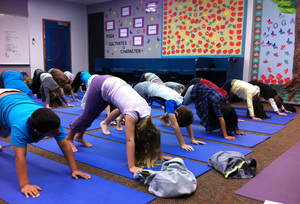
During first period at Olivenhain Pioneer Elementary School in Encinitas, Calif., Kristen McCloskey leads about two dozen third-graders through some familiar yoga poses.
“All right, so let’s do our opening sequence A,” she says, instructing the kids. “Everyone take a big inhale, lift those arms up. Look up.”
At the end of the half-hour class, 8-year-old Jacob Hagen says he feels energized and ready for the rest of the day. “Because you get to stretch out and it’s good to be the first class because it wakes you up,” he says.
Schools across the country are focusing more on teaching students to make healthy choices; Encinitas Superintendent Tim Baird says yoga is just one element of the district’s physical education curriculum.
“We also have a nutrition program,” he says. “We also have a life-skills program where kids learn about perseverance and responsibility.”
The whole wellness program is supported by a $500,000 grant from the K.P. Jois Foundation. The Encinitas-based group promotes a kind of yoga called Ashtanga, which was introduced to Encinitas from India in 1975 by founder Krishna Pattabhi Jois.
But when Mary Eady visited one of the yoga classes at her son’s school last year, she saw much more than a fitness program.
The third-graders at Olivenhain Pioneer take three deep breaths in the downward dog position during one of their two weekly yoga classes.
Kyla Calvert for NPR
“They were being taught to thank the sun for their lives and the warmth that it brought, the life that it brought to the earth and they were told to do that right before they did their sun salutation exercises,” she says.
Those looked like religious teachings to her, so she opted to keep her son out of the classes. The more Eady reads about the Jois Foundation and its founders’ beliefs in the spiritual benefits of Ashtanga yoga, the more she’s convinced that the poses and meditation can’t be separated from their Hindu roots.
“It’s stated in the curriculum that it’s meant to shape the way that they view the world, it’s meant to shape the way that they make life decisions,” Eady says. “It’s meant to shape the way that they regulate their emotions and the way that they view themselves.”
Eady is part of a group of parents working with Dean Broyles, president and chief counsel of the Escondido-based National Center for Law and Policy.
“And then the question becomes — if it is religious, which it is, who decides when enough religion has been stripped out of the program to make it legal?” Broyles says. “I mean, that’s the problem when you introduce religion into the curriculum and actually immerse and marinate children in the program.”
Critics of the yoga class launched an online petition that garnered about 260 signatures as of Friday, about 50 of them voluntarily identifying themselves as parents in the district. Another online petition, in support of the class, had more than 2,700 signatures, which are anonymous to those who don’t sign.
Eady and the other parents working with Broyles want the classes made completely voluntary and moved to before or after the school day. They say school officials haven’t responded to their concerns.
Opponents worry that the class will be adopted in schools across the nation. They point to the Jois Foundation’s funding of researchers at the Universities of San Diego and Virginia to study whether the yoga classes affect things like attendance, behavior and student achievement.
“It is the stated goal of both the Jois Foundation and the district itself to prove scientifically that Ashtanga yoga works for kids here in the district and then export it nationally,” Broyles says.
Jois Foundation Director Eugene Ruffin, however, maintains that the yoga program is typical of athletics programs for kids.
“They provide you with the exercise and the motivation for children,” Ruffin says. “And then they give you character exercises — ‘Thou shalt not steal, thou shall be honest, thou shall be respectful to adults.’ ”
Ruffin says those ideals aren’t specific to Hinduism and don’t conflict with his own Catholic upbringing.
Despite the controversy, most parents, like Monique Cocco, are happy with the classes. She says her children don’t come home with a newfound knowledge of Hinduism.
“Absolutely not — no. What my daughter tells me is she did the pancake today and she lays down and then she cracks up because it’s so funny,” Cocco says.
Cocco hears from teachers that kids are calmer and more focused after yoga, so the teachers can spend more class time on lessons, instead of settling kids down the way they sometimes have to after traditional gym classes.
When winter break ends Monday, the school district is moving forward with plans to have the classes taught at all nine Encinitas schools.
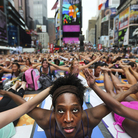
하지만, 늦었습니다. 이미 요가는 미국의 모든 학교에 다 파고들었습니다. 지금 미국에서는 98,817개의 public elementary school과 33,366개의 사립초등학교가 있습니다. 합치면, 132,183개가 됩니다.1) 13만 2천개가 넘는 학교에 퍼진 힌두교의 영향을 막을 수가 없습니다.
반면에, 필라델피아에 배포된 Philadelphia Inquirer에서는 공립학교에서 어린이들이 요가를 너무 좋아한다는 기사를 실었습니다. 학부모들도 요가에 대해서 찬성한다고 적어놓았습니다. 이유는 딱 두가지 입니다. 어린이들이 좋아한다는 것과, 호흡을 통해서 아이들이 집중하고 차분해진다는 것이 이유입니다.
http://www.philly.com/philly/health/20130109_Preschoolers__the_youngest_yogis.html
Terri Akman, For The Inquirer
POSTED: Wednesday, January 9, 2013, 10:10 AM
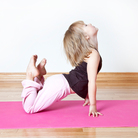
A dozen toddlers bend their bodies into intricate poses, bark like dogs through fits of giggles, and finally lie down on small mats for a few minutes of peace and quiet.
Just a typical day at yoga class for the preschool set.
“I love the downward dog because it’s really funny!” said 4-year-old Elly Cicha of Cherry Hill.
If you think Elly is young to undertake the thousands-year-old Indian practice, consider Anabel Silver, who started in utero. The Center City fifth-grader claims the crow as her favorite pose, and with 11 years of yoga under her belt, she’s found that the discipline aids her in other ways: “Yoga helps with things that trouble you.”
When another girl from school wasn’t nice to her on a camping trip, “At night I tried to stay calm, and I would count and listen to my breathing and that would really help calm myself down,” Anabel said. “It helped center my mind and helped me feel better about it.”
More children are striking poses as yoga – now very much a mainstream activity – is included in school gym curriculums as a Wii game, and even as a requirement for a Girl Scout patch. A national push to fight childhood obesity and a search by many parents for less competitive, noncontact physical activities has translated into more yoga studios catering to increased demand with more class offerings and bigger class sizes. From baby yoga through high school, every age group can practice with classes incorporating music, story time, and role-playing.
“There is more pressure on kids in school to succeed and participate in a lot of things, and yoga is a good way for them to center and calm down,” said Mark Nelson, owner of the Yoga Garden in Narberth, which opened a second location on South Street in September. “In the three years since we’ve owned the Narberth location, class sizes have doubled, and in some cases went from four-person classes to eight, 10, and even 20 kids.” Classes with the most growth, Nelson said, are those for the youngest students.
Sharlene McKinley opened Cerca Trova Yoga in Havertown in 2010, and has witnessed steady growth with classes for younger kids. She’s also putting effort into growing the teen market. “People are seeing the healthy outcome of a yoga practice. . . . As kids see more adults embracing yoga, it becomes the cultural norm.”
Yoga, which means “join” or “unite” in Sanskrit, is a physical, mental, and spiritual discipline that originated in India. And although there are many and sometimes trendy variations on the ancient practice – iyengar, kundalini, bikram – all yoga focuses on breathing and mindfulness through poses, some of which kids do naturally.
“Yoga is great for kids on many different levels – physical, mental, and spiritual,” said Jana Cicha, who teaches preschool yoga classes in Evesham Township. “Yoga helps them focus on how they are feeling and what they are feeling, and helps them find that inner quiet.”
Typically, a preschool yoga class begins with running around, explained Gail Silver, founder of Yoga Child in Center City. She started her company in 2001 to train teachers to bring a yoga and mindfulness curriculum to schools.
“For younger kids, as young as 2, we try to keep the yoga playful and animated,” said Silver. “Often we’ll build our yoga around music and storybooks.”
Through “magical meditations,” kids practice blowing out pretend candles on a birthday cake to understand breathing techniques and discuss whether breathing from their bellies or chest feels more calming. They then journey to a special place, such as the moon or a forest, learning yoga poses that carry them on their tour.
As the class winds down, so does the activity. Through a game or song, children are prepared for the eventual savasana, or corpse pose, which, unsurprisingly, involves lying down. That’s when children “really get a chance to let the benefits of the practice sink in and to learn how to lie still,” Silver said. “For many children that takes time, but it becomes one of the most enjoyable parts of the practice.”
Laura Maron, who teaches yoga for all age groups in several South Jersey locations, sees benefits at every age. “For babies, it’s all about body awareness, and I’ve had babies roll over for the first time in Mommy and Me yoga class,” she said. “Elementary-school kids are already flexible, so it’s more about focus. Middle-school kids learn to take a deep breath and not react right away to things, and for teenagers, it’s about flexibility and focus.”
Kevin McKeever, 17, tried yoga when he was 12, and has practiced ever since. “I really like the movement part and the way it makes me feel,” said the Shipley School senior. An athlete in basketball, soccer, and baseball, he said “yoga helps me in all my sports in flexibility, and I find when I do yoga regularly, I’m much more energized and am better able to stay alert and awake.”
Yoga is a great physical activity for kids, assuming they are supervised with a trained instructor and well-hydrated, said Jennifer Naticchia, of Virtua Sports and Family Medicine. “Yoga is good for our physical health and mental health, and stretching and flexibility will prevent falls as you get older.”
Beyond physical concerns, some parents resist enrolling their children because they don’t understand the terminology: Chakras refer to physical areas of the body, asanas are postures, and pranayama is breath control.
“People say you’re chanting and saying religious things,” said Cicha. “There is no religion called yoga and no religious meaning behind the things you are doing in yoga. It’s literally a union between your mind and your body.”
Silver believes that children gain the most from yoga when combining the practice with mindfulness. “When kids are on the mat stretching their bodies and paying attention to their breathing, it’s a prime opportunity to help them understand how they’re feeling – what does and doesn’t feel good to them.”
For homework, kids draw on these lessons, for example, by thinking about a situation and creating a picture or writing out what happened.
“We’ll ask them when they feel angry to try to practice volcano pose or try to sit with their anger or breathe with their anger,” Silver said. “It’s where you get to see the kids learning these practices at such a young age, when they are ripe for learning.”
For Elly Cicha, that’s lower on her priority list. “I like the running around part of yoga, I like the breathing, and I like being with my friends.”
필라델피아의 영적인 분위기를 조심해야 하겠습니다.
1) 2012년에 발간된 2011년까지의 통계자료. U.S. Department of Education, National Center for Education Statistics. (2012). http://nces.ed.gov/fastfacts/display.asp?id=84
관련 글들
 November 23, 2012 교회 경매가 다시 늘어난다….
 October 18, 2013 D. A. Carson’s The Book of Hebrews
 December 13, 2013 작은 일탈의 재미
 December 4, 2012 Shaken Baby Syndrome 에 대한 이야기

